Research and conservation of a Sardinian endemic
The Sardinian brook newt, Euproctus platycephalus, occurs only in Sardinia, where it inhabits mountain streams, springs and pools. The project combines distribution research, conservation in the wild and captive breeding to develop and evaluate reintroduction and reinforcement measures.
The programme involves the Department of Science at Roma Tre University, Fondazione Bioparco di Roma, the Sardinian regional government and the Fo.Re.S.T.A.S. agency. Ex situ conservation began in 2009; ISPRA issued a favourable opinion on the pilot reintroduction programme for 2019–2021 on 1 April 2019.
Understanding distribution
Surveys in 2010–2015 documented 57 populations, compared with 14 used in earlier assessments. Combining field surveys, literature, interviews and observations helped update the distribution of this elusive species and identify gaps in existing knowledge.
Water, drought and habitat quality
For the Sardinian brook newt, the presence of a stream alone is not enough: the duration of water availability also matters. A shorter hydroperiod — the period during which a habitat holds water — can reduce aquatic refuges and compromise larval development. Prolonged drought, water abstraction and habitat fragmentation can act together, increasing the vulnerability of isolated populations.
Spring-fed headwater reaches can provide important dry-season refuges through cooler conditions and more persistent surface water. Their suitability still requires field assessment: seasonal water availability, temperature, stream structure, shelter and introduced aquatic predators all contribute to habitat quality.
Connecting population and environmental evidence
Assessing populations requires information on reproduction, juvenile occurrence and site conditions alongside individual re-encounters. Observations of adults and larvae become more informative when considered together with water persistence and seasonal drought.
Health risks also matter: animal movements and fieldwork require precautions against pathogen spread. Conservation therefore brings together habitat quality, animal provenance and sanitary safeguards.
Captive breeding at Bioparco
The ex situ programme maintains groups from different source populations to represent the species’ genetic diversity. Captive-born animals are raised to a suitable release stage under husbandry and health-screening protocols. Aquaria include water cooling, filtration and aeration systems, with regular water-quality monitoring.
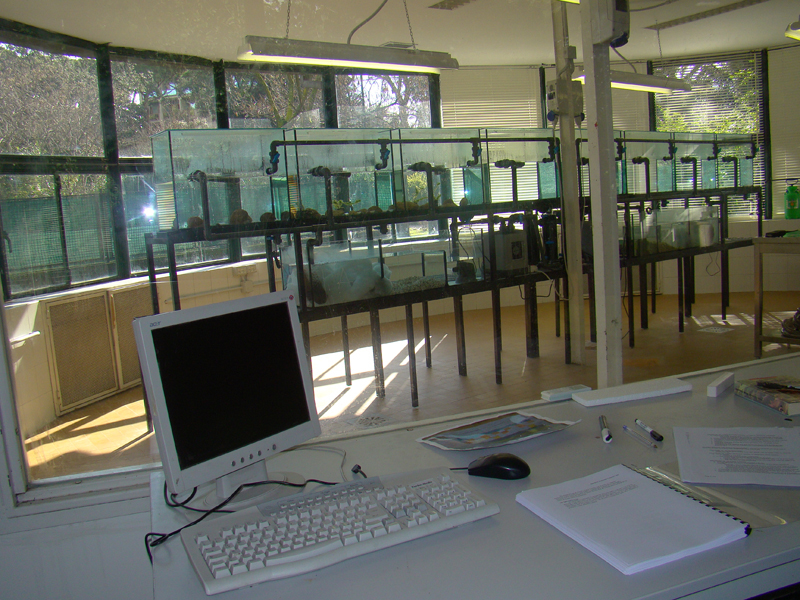
The Fondazione Bioparco di Roma laboratory used to rear animals for the project. Source: feasibility study, figure 1 (2010–2018).
Reintroduction in the Settefratelli Mountains
The release site was selected through an assessment of the species’ historical presence and field visits examining water availability, vegetation cover, threats and health risks. Genetic compatibility between captive animals and populations in the area is a central selection criterion.
On 1 October 2019, 30 adults — 15 males and 15 females — were released. Monitoring through summer 2020 recorded released animals and larvae, providing evidence of reproduction. Pandemic restrictions subsequently interrupted activities during part of 2020 and 2021.
Despite the reproduction observed in 2020, the first reintroduction did not establish a population that persisted over the long term. Prolonged drought and the loss of surface water offer a possible explanation, although the outcome cannot be attributed with certainty to a single cause. This experience highlights the importance of assessing whether aquatic refuges persist through dry periods, alongside successful captive breeding and release.
In 2024, another 38 animals were released at the Settefratelli site. Founder animals originally collected at Perdasdefogu and Villagrande Strisaili were also returned to their respective source sites that year.
Recognising individuals and assessing outcomes
The monitoring protocol uses photographic identification based on pigmentation patterns, especially on the throat. Comparing photographs with the pre-release database helps recognise animals encountered again over time.
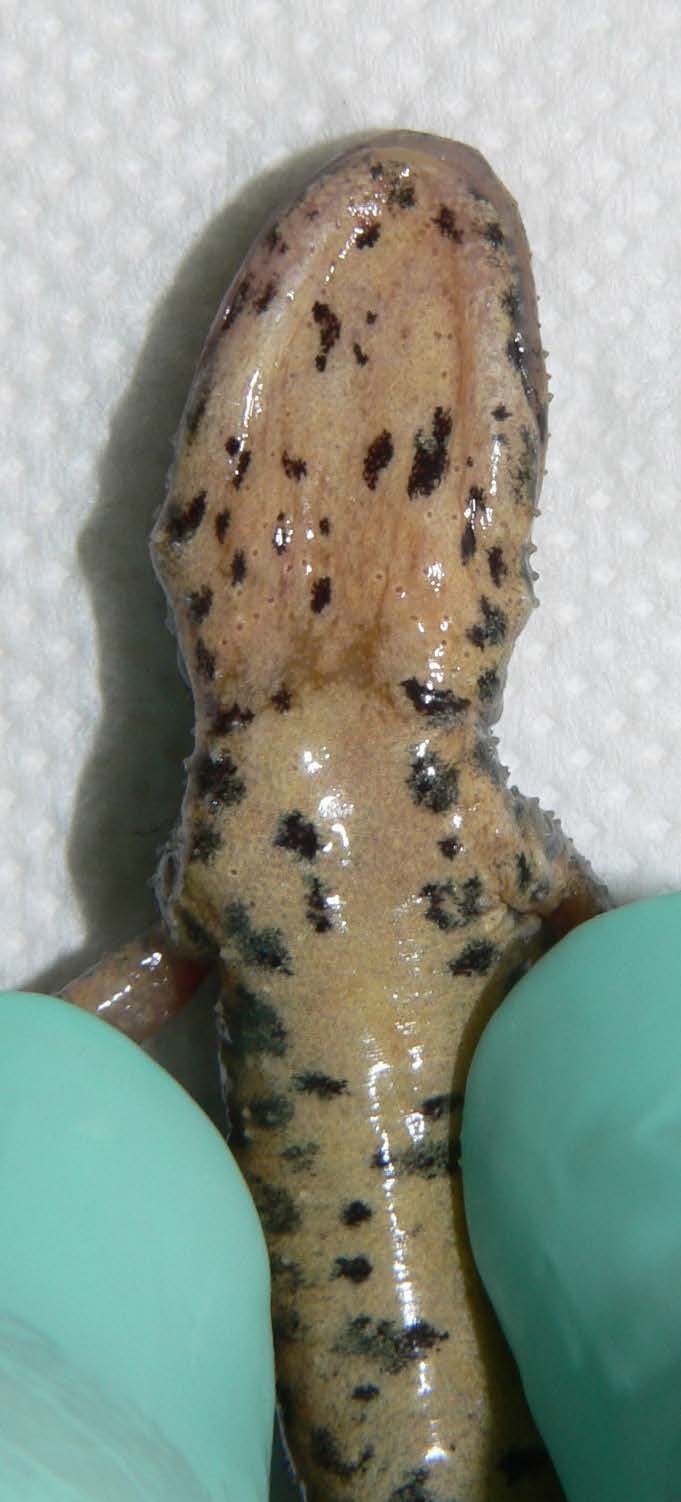
The feasibility study sets out three years of monitoring, considering re-encounters, survival and reproduction. Larval observations are an important early result; assessing whether a viable population persists requires long-term observations.
Further reading and publications
- Distribution and implications for conservation assessments — Oryx
- EAZA Best Practice Guidelines for ex situ management (2015)
- Amphibian research and conservation — AIGZOO
Publications
- Vignoli L., Macale D., Luiselli L., Lecis R. & Casula P. (2016). Are conservation assessments of threatened species reliable? Updated distribution of the Endangered Sardinian newt Euproctus platycephalus and implications for Red List assessments of Italian amphibians. Oryx.
- Rovelli V., Ruiz-González A., Vignoli L., Macale D., Buono V., Davoli F., Vieites D.R., Pezaro N. & Randi E. (2019). Genotyping-by-Sequencing (GBS) of large amphibian genomes: a comparative study of two non-model species endemic to Italy. Animal Biology.
- Casula P., Vignoli L., Luiselli L. & Lecis R. (2017). Local abundance and observer’s identity affect visual detectability of Sardinian mountain newts. Herpetological Journal.
- Vignoli L., Velletrani F., Venditti C., Luiselli L., Yadid Y. & Macale D. (2018). Short, medium and long-term effects of density on the demographic traits of a threatened newt. Ecological Research.
